01
Road danger
Pedestrian and cyclist crashes, young victims, main roads, speeds and pedestrian discontinuities around the site.
A decision-support tool for school streets, calmer streets and safer crossings.
ECODIT helps local authorities decide where action is most needed around schools, while keeping actionability separate from priority. It turns open data into an explainable programming matrix.
The interface shows the full ranking, filters by territory, searches for a school and opens a detailed site card with priority, separate actionability, key indicators and a plain-language explanation.
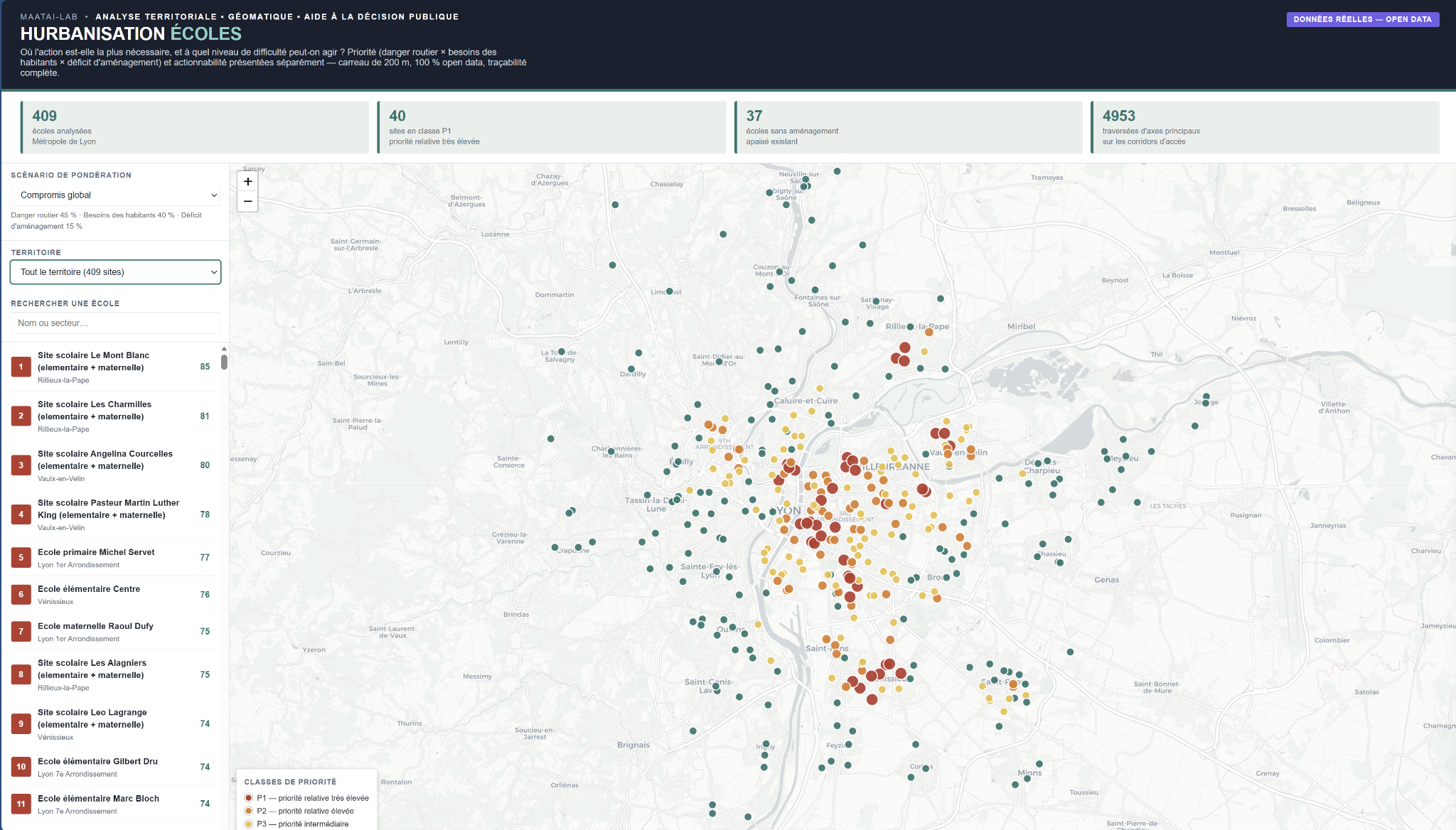
ECODIT does not merge priority and feasibility into one opaque score. It keeps two readings separate, then crosses them in a programming matrix.
Pedestrian and cyclist crashes, young victims, main roads, speeds and pedestrian discontinuities around the site.
Potential presence of children, poverty and possible dependence on non-car mobility.
Detection of school surroundings with no nearby calmer-street treatment.
Indicative reading of intervention difficulty: road status, diversion, transit and planned works.
The site card details the factors behind the ranking: road danger, residents’ needs, missing calmer design, actionability and key indicators.
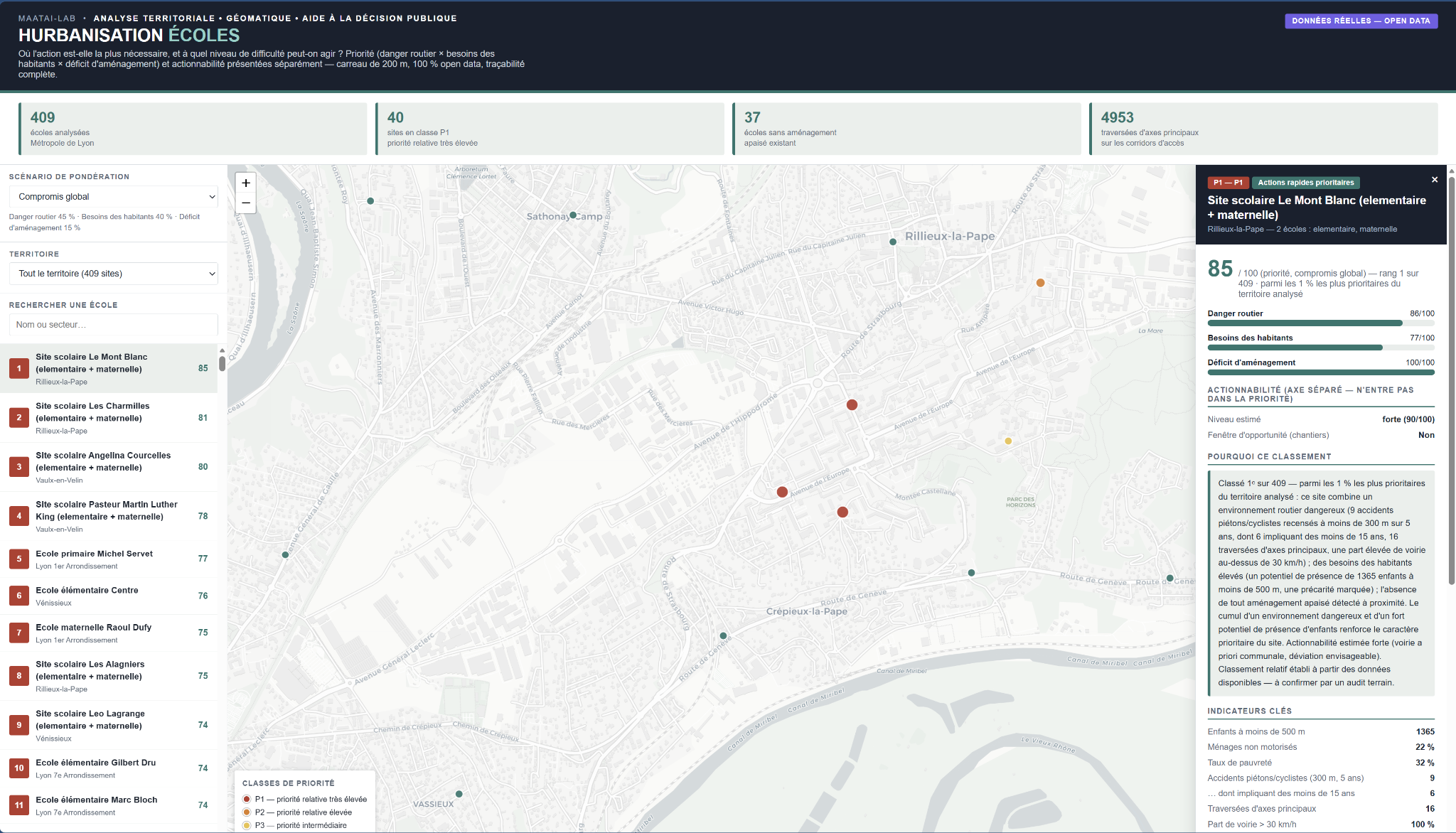
ECODIT helps build a portfolio: quick priority actions, structural projects to prepare, secondary opportunities and sites to monitor.
High-priority and high-actionability sites: the operational base for early decisions.
Sites that are just as necessary but harder to handle: they should not disappear behind convenient sites.
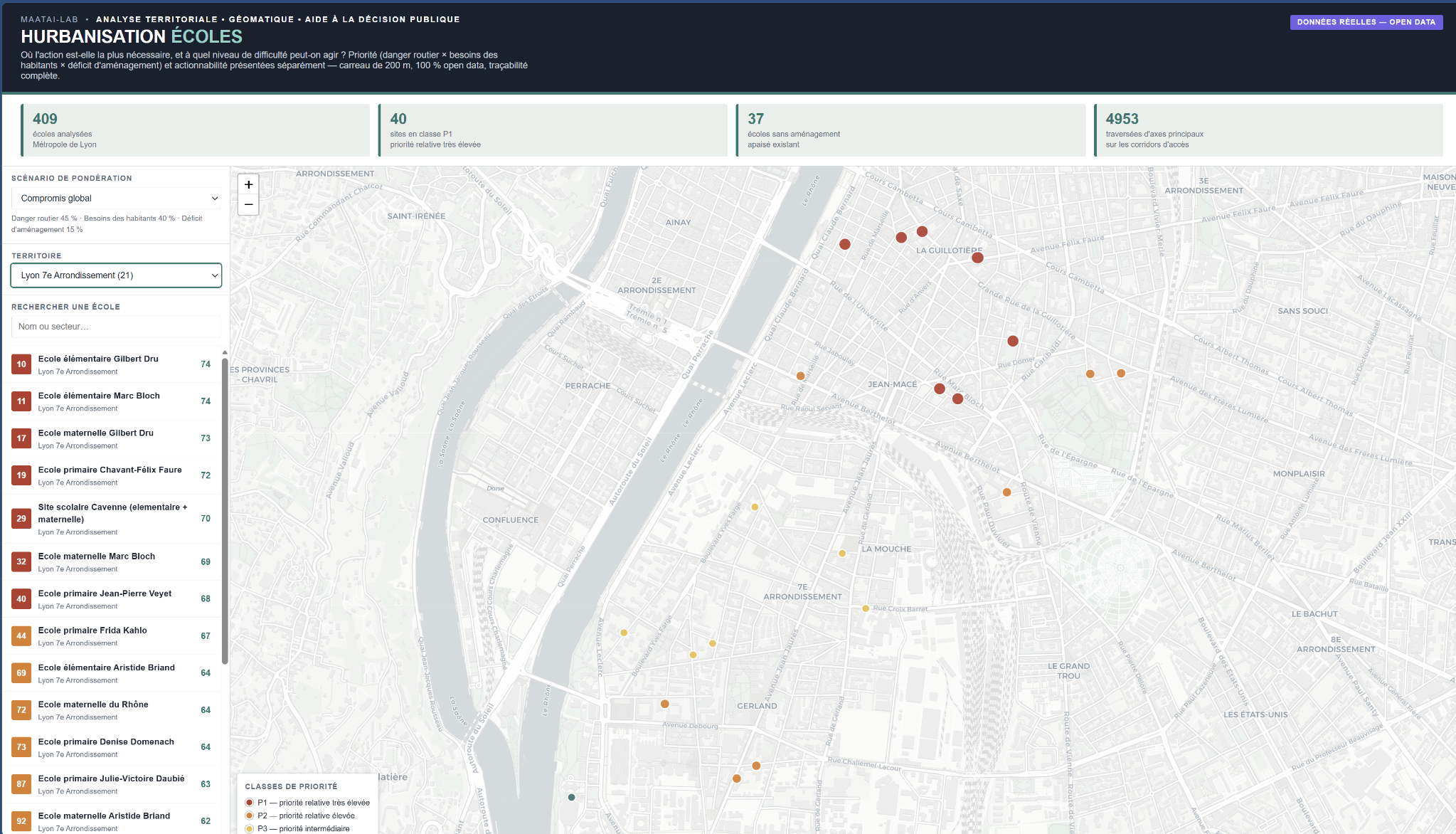
The tool moves from the metropolitan view to an operational area, such as Lyon 7th district, with automatic zoom and a local school-site list.
The ECODIT × FRAÎCHEUR bridge highlights schools where safer surroundings and cooler courtyards reinforce each other. It helps coordinate public works, education, climate adaptation and investment planning.
A pilot can deliver the ranking of all public school sites, an interactive map, detailed priority cards and a review workshop with your teams.